


Introduction
Scale-up risk is a repeatable pattern, not bad luck. In a fast-growing plant, pouch cell lines must hold tight tolerance and maintain a clean chain-of-custody. In pouch cell production, scrap can climb from 2% to 7% within a month after expansion, while OEE drops by double digits (and the compliance team sounds the alarm). What control will stop that slide without slowing output? Consider the dry room dew point, calendering pressure, and electrolyte wetting time—each has legal and safety impact. Process capability, not inspection volume, sets the floor. Yet teams reach for more end-of-line tests, more sampling, more reports. Does that fix capacity drift or formation cycling defects? Or does it just add delay? Look at the cost to rework, the risk profile, and the duty of care. Then ask the key question: where are the hidden drivers of loss? We will go there—carefully, step by step.
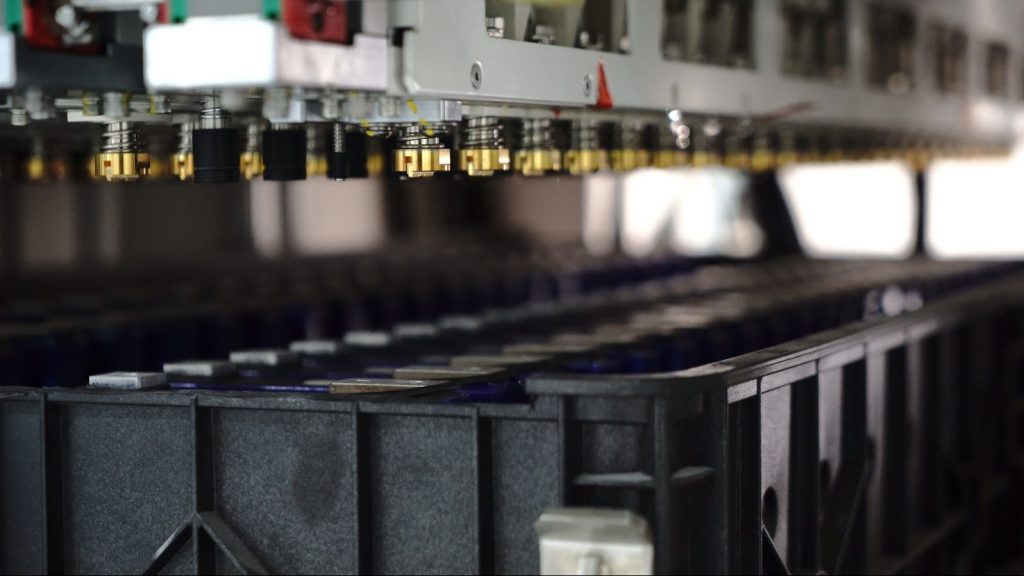
Next, we examine the traps baked into “standard practice,” and why they keep failing under scale.
Hidden Flaws in Traditional Scale-Up
Where do the errors hide?
Earlier, we flagged obvious faults like slurry mixing and tab weld quality. Now the deeper layer: the legacy fixes that seem safe but are not. First, end-of-line testing becomes a crutch. It is slow, and it does not prevent upstream drift in roll-to-roll tension control. Second, offline metrology creates blind spots. Samples look fine, yet ion transport suffers due to uneven calendering nip load—funny how that works, right? Third, schedule-driven “rush” runs change the dew point in the dry room by a few degrees. That tiny shift reshapes SEI formation later. The result is capacity scatter and early swell. Look, it’s simpler than you think: inspection cannot recover what process control never held.

Traditional SPC works when change is slow. Scale breaks that. Coater dynamics shift with fresh lots, viscosity, and web speed. Laser tab welding drifts with lens fouling. Electrolyte wetting varies with stack compression and time-at-vacuum. Meanwhile, the MES logs are clean, but the response is late. By the time alarms fire, hundreds of sheets pass. Pain points pile up: higher scrap, rework queues, and mystery capacity fade after formation cycling. The core flaw is latency. Control loops are long; the line is fast. Without inline feedback, small errors become systemic costs.
Comparative Outlook: New Tech vs Old Habits
What’s Next
Old habit: measure at the end. New principle: act at the source. Inline vision fused with web force sensors can close the loop on coating, in milliseconds. Edge computing nodes sit beside the coater and calender, not in a distant server. They adjust gap, speed, and temperature in real time. Digital twins link process states to later formation behavior, so a 1% binder shift triggers an early correction, not a late reject. In pouch cell production, that means fewer surprises during formation, steadier SEI growth, and tighter capacity bins—small moves, measurable gains.
Compare this to offline checks and batch reports. Those tools explain yesterday. Inline impedance tracks wetting progress now. Thermal cameras catch foil wrinkling before stacking. Power converters on formation racks deliver precise current ramps, so recipe drift is not a guess, it is a flag. The payoff shows up as yield, energy, and time. Less rework, lower kWh per Wh, faster release to pack. Different path, same goal—quality without drag. And yes, it scales. When the loop is short, the line runs steady; when the loop is long, scrap grows.
How to Choose with Confidence
Here are three metrics to guide decisions, not slogans. One: control latency from sensor to actuator, in milliseconds, at each critical point (coating, calendering, stacking, wetting). Two: genealogy depth—part-to-batch traceability down to sheet and tab weld, tied to formation results. Three: energy per Wh through formation and aging, normalized by yield, so improvements are real, not a mirage. Apply them and benchmark both old and new flows. If the loop is shorter, the data richer, and the energy lower, you are on the right track. Keep the tone practical, keep the duty of care clear, and select partners who publish these numbers. For a deeper technical view of equipment and process linkages, see LEAD.