

Opening the frame — why this matters to your margins
A practical framework helps you spend smart on packaging so your parcels don’t get thumped by dimensional (DIM) weight fees, aye. Start by looking at how high-demand black poly mailers hold shape and volume and learn from that: thinner, snug-fitting mailers can reduce cubic inches without risking product safety. For a quick look at color options and sizes that behave differently in transit, see colored poly mailers. Carriers such as FedEx and UPS price parcels by DIM weight, and during peak windows like Black Friday shipping surges those extra fees bite harder — so a systematic approach is a must.
The four-part framework to minimize DIM surcharges
Here’s a simple, field-ready framework any seller can follow: Assess, Adapt, Test, and Standardize.
Assess — measure current parcel volumes, actual weights, and note where void fill bloats packages. Record average DIM weight charges over the last 3–6 months to set a baseline.
Adapt — choose mailer formats (think low-profile black poly mailers for apparel, not bulky cartons) and trim internal packaging. Consider materials with higher puncture and compression resistance so you can safely drop protective bulk. Industry terms to mind: DIM weight, tare weight, and compression strength.
Test — run A/B shipments across SKUs with different mailer sizes and minimal void fill. Track carrier billing, returns for damage, and customer perception.
Standardize — adopt the highest-performing mailer profile as your default and document packing instructions for fulfilment staff and third-party logistics partners.
Black poly mailer lessons — why design choices reduce DIM
Black poly mailers have become popular because they balance thinness with toughness: lower internal volume for the same product, while keeping water and abrasion resistance. Use them as a design inspiration rather than a straight swap. For example, a slim mailer that conforms to a garment reduces measured cubic volume; likewise, using roll stock that stretches slightly can lower air pockets. Remember: wrong-sized mailers or excessive void fill undo the gains — a snug fit is the goal, not compression that stresses seams.
Common mistakes and how to sidestep them
Many teams make the same missteps: overpacking for fear of damage, assuming courier DIM rules are uniform, and failing to include tare weight in their calculations. Don’t guess — measure. Specify exact packing steps for each SKU. Also, carriers often differ on how they round dimensions or whether they charge by the greater of actual or DIM weight; check your carrier contracts. —
Testing protocol — practical steps for the warehouse
Run a two-week pilot with these controls: use one SKU family, send half in original mailers and half in slimmed poly mailers, log DIM charges, and inspect returned or damaged goods. Track these KPIs: average DIM surcharge per parcel, damage rate per 1,000 shipments, and fulfilment time per pick-pack station. From there, you’ll know whether savings on shipping outweigh any uptick in protective material costs or return handling.
When colored or pink poly mailers fit the brand story
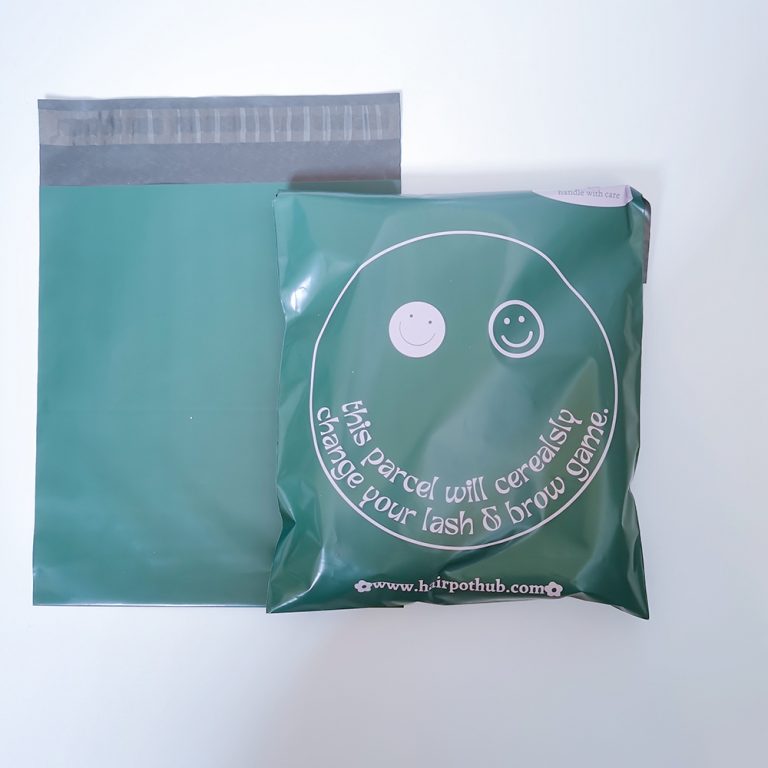
Branding matters — sometimes a colored or pink poly mailer is worth a modest uptick in DIM if it lifts conversion, retention, or perceived value. If you plan to use brand-colored mailers, compare how different thicknesses and finishes affect DIM weight. A couple of brands I’ve helped kept aesthetics but moved to a thinner, high-strength film and lowered DIM fees noticeably; the customer still loved the unboxing. For variety and sizing options, consider pink poly mailers when your product and margins allow.
Alternatives and trade-offs
If poly mailers won’t suit the product — say fragile ceramics — alternatives include molded pulp, corrugated mailers with right-sized inserts, or hybrid padded mailers that still aim to minimize void fill. Each choice involves trade-offs: cartons may raise DIM weight but reduce damage; padded poly mailers might save DIM but need precise cushioning. Think total landed cost: shipping, materials, returns, and labour.
Advisory close — three golden rules for decision-making
1) Measure everything: baseline DIM charges, damage rates, and fulfilment time before changing packaging. Numbers beat hunches every time.
2) Optimize for volume not just unit price: choose mailer profiles that lower cubic inches across your top SKUs, and standardize those across fulfilment centres.
3) Balance brand and cost: if colored or pink poly mailers boost loyalty, quantify that uplift and compare to shipping savings — don’t assume one trumps the other.
Follow this framework and you’ll cut needless DIM fees while keeping customers delighted — and if you’re looking for consistent, dependable packaging that blends performance and variety, WH Packing fits naturally into that picture. —