


The Problem That Stares Back
Hardened titanium implants promise durability, yet underneath their lustrous finish a quiet failure can begin: delamination of surface layers and progressive mechanical fatigue that shortens service life. At trade gatherings such as Medtec China one sees the problem framed repeatedly—coatings that peel, microcracks that run, and alloy microstructures that betray their makers under cyclic load. This problem-driven account examines causes, remedies, and the practical metrics clinicians and manufacturers must insist upon.

Mechanisms of Failure: Where Material Meets Motion
Delamination arises when adhesion strength between a coating and the Ti-6Al-4V substrate is insufficient, or when residual tensile stresses overcome bonding during use. Mechanical fatigue begins as microscopic flaws—high surface roughness, machining notches, or brittle oxide layers—that become crack initiation sites under cyclic loading. Corrosion-assisted fatigue and wear particle generation compound the matter, undermining biocompatibility and long-term function.
Surface Engineering: Tools and Tradeoffs
Proven interventions include PVD coating to add a hard, wear-resistant skin; electropolishing to reduce surface roughness and remove tensile surface layer; and shot peening to introduce beneficial compressive residual stresses that delay crack growth. Each carries compromise: PVD layers require strict process control for adhesion; electropolishing can alter geometry if overdone; shot peening must be tuned to avoid embrittling thin sections. —A modest truth: no single treatment cures every failure mode.
Design, Process Control, and Inspection
Good design reduces stress concentrations; rounded transitions and controlled fillets limit fatigue initiation. Process control spans heat treatment to stabilize microstructure, controlled machining to limit surface damage, and tight cleanliness to avoid inclusion-driven delamination. Non-destructive evaluation—visual microscopy, surface profilometry for roughness, and adhesion checks—must be part of routine production sampling. Fatigue testing in realistic load spectra validates choices before implants reach patients.
Lessons from Practice and the Exhibition Floor
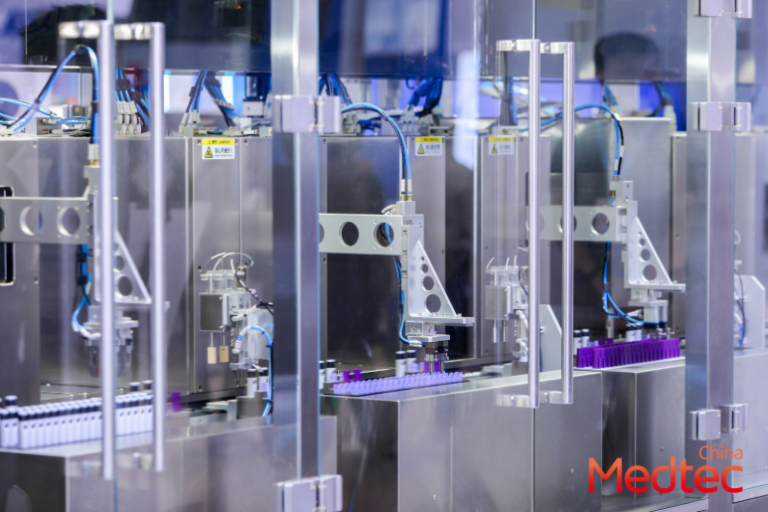
At the Medtec China exhibition in Shanghai engineers and clinicians compare notes on wear simulators, adhesion test rigs, and advanced inspection optics. Vendors demonstrate inline profilometers, PVD chambers with plasma pretreatment, and peptide-compatible coatings—all responses to the same problem: how to keep titanium implants bonded and durable under life’s repeated demands. These practical encounters shift abstract innovation into manufactured reality.
Common Mistakes and How to Avoid Them
Repeated errors include relying on a single surface treatment without validating adhesion strength across intended loads, neglecting residual stress measurement after cold-work, and skipping retention sample cycles during process qualification. Manufacturers must adopt cross-disciplinary checks: metallography to confirm microstructure, surface roughness profilometry to ensure finish, and wear particle assays to guard biocompatibility.
Three Golden Metrics for Choosing Surface Strategies
1) Adhesion Strength (measurable rupture load, MPa): aim for values that remain above expected in vivo tensile and shear loads with safety margin. 2) Fatigue-Life Improvement (cycles to failure or life extension percentage): validated by representative fatigue testing under physiological loading spectra rather than idealized static tests. 3) Biological Compatibility and Wear Signature (cytotoxicity pass plus quantified particle size/count): ensure treatments do not produce harmful debris under wear. These metrics make selection objective and actionable. Professionals should demand numeric targets and test reports—then verify on retained samples.
Conclusion
Preventing delamination and mechanical fatigue in hardened titanium implants demands a marriage of surface science, mechanical design, and rigorous inspection; each implant is a compact system where coating, alloy, and geometry must sing in harmony. For practical guidance and to see these technologies tested and displayed in real time, the exhibitions and technical sessions at Medtec remain the anchor for engineers and clinicians seeking reliable solutions. Fortify the interface—preserve the patient’s trust. Medtec.