

Introduction
Have you ever paused and wondered why small shifts in a millimeter matter so much in a lab? I ask because I watched a student redo an entire implant after a 0.5 mm drift — and that was costly in time and morale. The automated stereotaxic Instrument sat on the benchtop in that room, humming quietly while people debated manual vs. automated steps (more on that later). Data keeps piling up: repeatability numbers that were once ±0.3 mm now trend toward ±0.05 mm in some setups. So I have to ask — how will this change our workflows, budgets, and training plans?
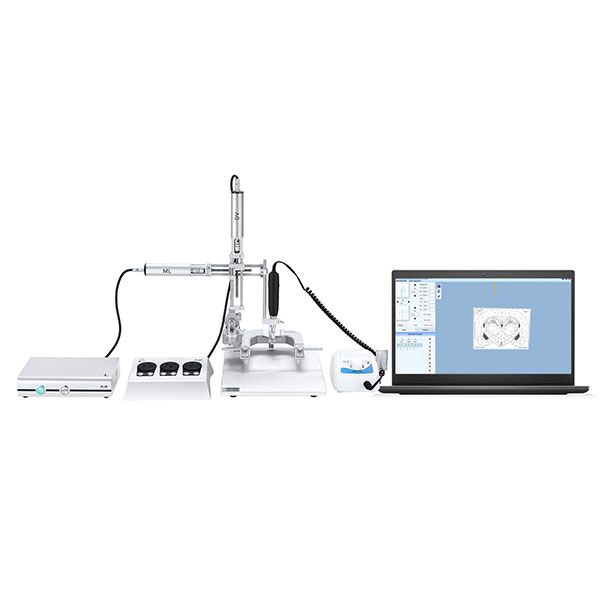
I write as someone who cares about sustainable lab practice. I want fewer wasted animals, fewer repeat surgeries, and smarter use of power and materials. That means I look at servo motors, micromanipulators, and the whole stereotaxic frame, not as toys but as instruments of efficiency. We can reduce downstream waste if we improve positioning accuracy early on. This piece will walk through the real snags we face now — and point toward concrete shifts. Next, I’ll dig into where the traditional solutions actually fail and why that matters for people on the bench.
Traditional Flaws and Hidden Frictions
Where do we hit walls?
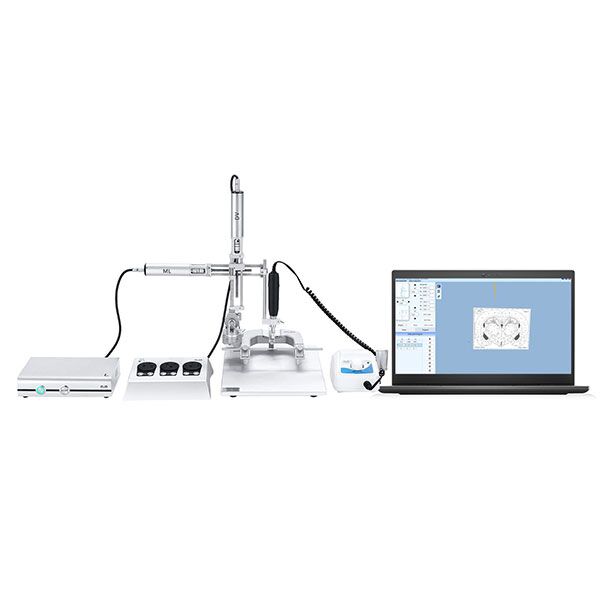
I want to be blunt: the old ways still hide a lot of friction. When I talk about a digital stereotaxic instrument, I mean a system that ties an XYZ coordinate system to automated control. In many labs, the manual micromanipulator is trusted because it feels familiar. But familiarity costs time and introduces human variability. You can lose minutes — or hours — as technicians warm up gear, re-zero a frame, or compensate for hand tremor. That adds up in experiments and budgets. I’ve seen it. We have to admit it.
Technically speaking, there are three big pain points. First, calibration drift: analog rigs rely on human checks and subtle mechanical tolerances. Second, data traceability: manual steps leave poor logs, so reproducing a protocol is hard. Third, throughput: one skilled operator equals one run. That bottleneck slows progress and raises costs. Look, it’s simpler than you think — automation can address each of these. But not every automated setup is equal. Servo motors can vary in backlash. The controller firmware matters. And the stereotaxic frame geometry is not just hardware; it defines how reliably you hit a target.
What Comes Next: Principles and Practical Measures
What’s Next
I’ll shift to the forward view now. New principles are emerging for how labs adopt automation. First, closed-loop control is key: feedback from sensors lets a digital stereotaxic instrument correct small errors in real time. That reduces positioning error and cuts rework. Second, modular design matters. If you can swap a controller, upgrade firmware, or replace a micromanipulator without changing the whole system, you extend product life and lower waste. Third, data-first workflows help teams share methods and reproduce results reliably. I like these ideas because they save resources and time.
Practically, I recommend labs test three things before buying: repeatability over 100 cycles, latency of the control loop, and ease of software integration. Those metrics tell you where a product will hurt or help in daily use. Also — funny how that works, right? — users often underestimate training time. A good interface reduces onboarding from days to hours. Compare vendors on servo motor specs, controller latency, and how the system logs coordinates. If you evaluate this way, you’ll choose tools that match your science, not just your wishlist.
To close, let me give three straightforward metrics to weigh purchases: 1) Positioning accuracy under load (mm); 2) Repeatability over 100 cycles (standard deviation); 3) Integration ease (API and data export formats). Those three tell you whether a system truly improves throughput and reduces waste. I believe automation, when chosen wisely, helps labs work more sustainably and with fewer hurts along the way. For practical options and support, I often turn colleagues toward BPLabLine — they make tools that match the needs I’ve described.