

Introduction — a quick scene
I remember crouching beside a cluttered bench, coffee cooling, while someone shouted that a perfusion map would save the day—only the map looked like static. In that moment I started digging into laser speckle contrast imaging lsci, and I found that simple ratios and a few frames can reveal blood flow patterns in real time (and yes, sometimes it feels like magic). Recent demos show up to 30 frames per second on mid-range cameras and sensitivity improvements of 20–40% with better algorithms—so why do many teams still struggle to get usable maps? Let’s walk through what trips people up and where the real gains hide, then I’ll share practical ways forward.
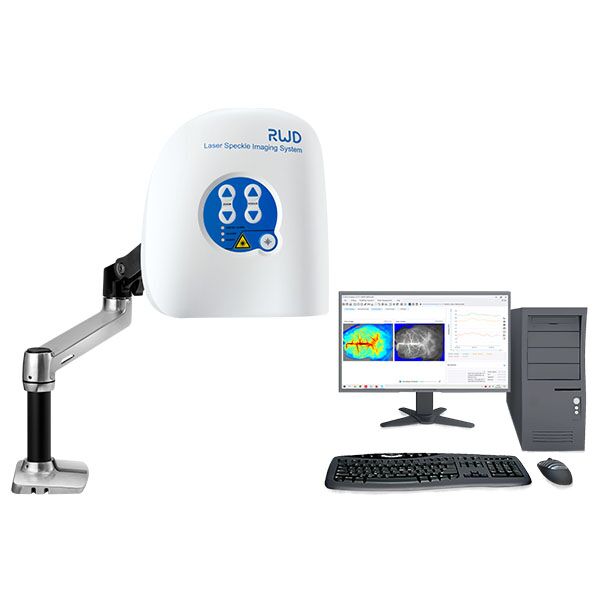
Part 2 — Why old fixes fall short (technical diagnosis)
laser speckle contrast imaging is powerful, but the usual fixes—more averaging, longer exposures, brute-force smoothing—often mask problems rather than fix them. I’ve watched projects add latency with heavy temporal averaging and then complain about lost dynamics. The core issue isn’t just noise; it’s mismatched assumptions: speckle contrast depends on exposure time, coherence, and motion statistics, yet many setups treat those as constants. Edge cases like low-perfusion tissue or motion artifacts (breathing, micro-movements) expose flaws in naive pipelines. When the image processing pipeline assumes stationary speckle statistics, the computed perfusion maps bias toward underestimation in low-flow regions. That’s a real user pain point—clinicians want crisp, trustworthy maps, not fuzzy guesses.
Look, it’s simpler than you think: better modeling beats blind smoothing. By addressing sensor characteristics (CCD vs CMOS), optimizing frame rate, and using adaptive ROI selection, you can preserve temporal fidelity and spatial detail. I favor a hybrid approach: combine short-exposure frames to capture rapid changes with selective temporal fusion to boost SNR only where it helps. This reduces motion blur without killing transient events. Industry terms you should know: speckle contrast, temporal averaging, ROI, and frame rate. I’ve found that when teams treat these as tuning knobs rather than fixed settings, results improve fast. Frankly, I get annoyed when groups ignore basic calibration—calibrate your exposure and coherence length first—and then wonder why numbers drift. Why settle for fuzzy maps when a few principled tweaks unlock much clearer insights?
How bad is the user experience?
Users report three repeat problems: confusing parameter menus, slow feedback loops, and inconsistent metrics across sessions. I’ve been in the room when a clinician hesitated because two maps taken minutes apart showed different baselines. That uncertainty kills confidence. Fixes are practical: better defaults, guided calibration wizards, and transparent metrics that explain variability. These are not glamorous, but they matter. I’ve learned to push teams to document baseline noise and motion artifacts—it saves hours later.
Part 3 — Looking ahead: principles and practical checks
What’s Next: New principles are emerging that make LSCI both more robust and easier to use. Modern approaches combine physics-aware models with lightweight machine learning to separate motion artifacts from true perfusion changes. In practice, that means using speckle contrast formulas that adapt to exposure and coherence, plus quick classification layers that flag frames affected by bulk motion. I’ll say this plainly: the goal is to reduce guesswork. When I design a system now, I build a short calibration sequence (30–60 seconds) that estimates coherence length and sensor noise, then lock optimal exposure and frame-rate ranges. The workflow becomes repeatable—better for clinicians, easier for researchers. Also—funny how that works, right?—adding a simple visualization of confidence alongside perfusion maps stops a lot of follow-up questions.
From a semi-formal, comparative angle, here are three practical evaluation metrics I recommend when choosing an LSCI solution: 1) Temporal fidelity: can the system resolve the events you care about at its chosen frame rate? 2) SNR after adaptive processing: does the map retain spatial detail in low-flow areas? 3) Workflow reproducibility: are calibration steps clear and quick? These metrics cover physics (coherence, exposure), hardware (sensor type, frame buffer), and UX (calibration, default settings). I prefer solutions that document their calibration routine and expose a confidence metric—because reproducibility beats flashy demos. If you want to explore reliable tools and calibrated systems, check out practical offerings from manufacturers like BPLabLine. I’m telling you—I’ve seen the difference in real labs, and it changes how people use the data.