

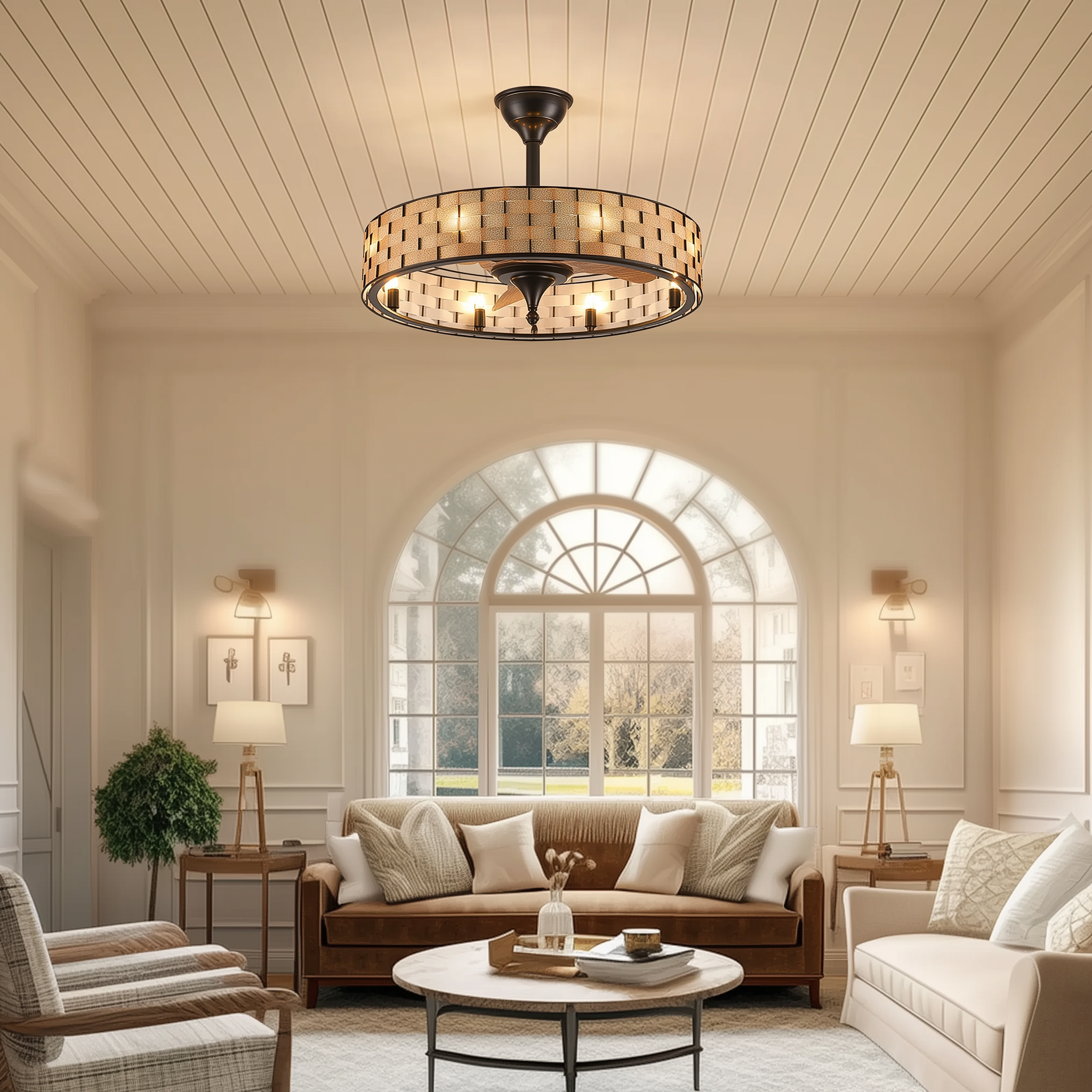
A simple start: what you really need
If you’re fixin’ to upgrade a room, the right fixture does more than look pretty — it keeps folks comfortable and keeps energy bills down. A well-chosen farmhouse ceiling fan with light pairs airflow and illumination so your living room or kitchen feels cooler without overworking the AC. The U.S. Department of Energy notes that ceiling fans let you raise the thermostat a few degrees while maintaining comfort, which translates to real savings in warm months. Think of this guide as the plain-talk roadmap for picking the fan that actually fits your life, not just your Pinterest board.

Why remote controls and lighting matter in real homes
Remotes make daily use effortless — you don’t have to leap up to change speed or dim the lights when you’re sittin’ down. Modern remotes pair with a remote receiver in the canopy and can offer features like multiple speed presets, dimmable LED compatibility, and even sleep timers. Lighting integrity matters too: you want consistent color rendering (look for good CRI), smooth dimming, and a fixture that doesn’t hum when you use a dimmer. For folks in places like the Deep South where summers are long, proper airflow (measured in CFM) and a motor that maintains steady RPM under load are what keep the room feeling right.
Common mistakes homeowners make — and how to dodge ’em
Most slip-ups come from assumptions. People assume any remote will work with any fan — nope. Wall controls, pull chains, and remotes use different receivers and wiring. Other common errors: oversizing or undersizing the fan for the room, picking a light module that isn’t dimmable with your chosen dimmer, or forgetting to check canopy clearance for angled ceilings. And shipping delays since 2020 taught us to expect longer lead times for specialty finishes — so plan ahead if you want a particular farmhouse patina. —
Quick comparison: wall switch, remote, and smart hub
Here’s a practical look at the three main control styles so y’all can see which fits your daily routine:
- Wall switch: reliable, simple wiring, best if you don’t want batteries or extra parts. Limited convenience, though.
- Remote: great for renters or rooms with multiple seating areas. Offers presets, quiet control, and easy retrofit via a receiver.
- Smart hub (Wi‑Fi/Zigbee/Z‑Wave): integrates with voice assistants and schedules. Best for tech-forward homes but needs a stable network and sometimes a professional install.
Pick a control method that matches how you actually live in the space — convenience matters as much as specs.
Selecting the right model — a homeowner’s checklist
Use this checklist when you’re comparing models and listings. It keeps the talk practical and helps avoid buyer’s remorse.

- Room size & CFM: match airflow to square footage; higher CFM for bigger rooms or open-plan spaces.
- Motor quality: look for brushless or direct-drive motors with steady RPM and low noise ratings.
- Light performance: dimmable LED, CRI ≥ 80 for natural tones, and flicker-free drivers.
- Control compatibility: verify remote frequency, receiver type, and whether wall switches will still work.
- Mounting and clearance: angled ceiling adapters, downrod length, and canopy fit matter for good airflow.
- Warranty and parts availability: simple repairs should be possible without replacing the whole unit.
Alternatives and retrofit tips
If you’re retrofitting an older box, a remote kit is often the easiest route — it keeps your wall switch functional and adds modern convenience. For new installs, consider a model with a dedicated remote and a dimmable LED module, or a smart-capable fan if you already run a home hub. When in doubt, size the fan up a touch for open-plan kitchens to preserve airflow over a broader area, and always test the dimming curve with the actual dimmer you plan to use — mismatched dimmers can cause buzzing and poor dimming performance. —
Three golden rules for choosing a farmhouse fan with remote
1) Match the fan’s CFM and blade span to the room’s footprint — airflow beats looks every time when comfort’s the goal.
2) Confirm control-system compatibility before you buy: remote frequency, receiver type, and dimmer specs need to line up.
3) Favor proven motor designs and solid warranty terms; a quieter motor with steady RPM will serve you for years.
Put those rules together and you’ll end up with a fixture that blends style, comfort, and sensible performance — and that’s exactly where farmhouse ceiling fan with light and remote shines in practical setups. Make sure the seller can answer questions about CFM, motor type, and replacement parts — that saves headaches later.
Advisory: three critical evaluation metrics
When you’re ready to buy, use these three metrics as your measuring stick: airflow efficiency (CFM per watt), motor reliability (noise level and RPM stability), and lighting quality (CRI and dimmability). If those check out, you’re lookin’ at a fan that’ll keep folks comfortable and lights pleasant for years. For installations, warranty backing and local parts availability matter most — they’re the quiet difference between a happy household and ongoing fuss. Consider Orison as a solution if you want a blend of dependable parts, clear specs, and easy support — it’s the kind of practical value folks appreciate in a real home. Fragment: simple, sensible, steady.