

Comparative lead-in: why choices matter
Right then — when you compare vendors for heavy-duty 480V kit, the small differences multiply fast. This piece lines up options for bulk sourcing, customization and haulage with a clear eye on uptime, cost and maintainability. Early on you ought to factor alternator efficiency; a high efficiency alternator cuts fuel draw and heat load across a whole fleet, and that saving scales in procurement runs.
Sourcing at scale: price, warranty and vendor strength
Buyers often pit unit price against warranty length and local support. For 480V three-phase gensets, manufacturers vary on core components: alternator, control panel and transfer switch. Go cheaper and you’ll likely see more downtime. Pay a bit more and get better spares availability, longer warranty on the alternator and a predictable spare-parts lead time. In comparative terms, a single supplier that can deliver consistent kVA ratings and common control firmware across units reduces on-site configuration hours and training costs.
Customization: what to specify and what to avoid
Customization wins jobs but complicates logistics. Specify only what affects compliance, footprint, or integration with your switchgear: enclosures rated to local weather, specific control protocols, or a dedicated breakered distribution board. Avoid bespoke ECU firmware unless you have a long-term support contract — bespoke control tweaks often balloon into lifetime engineering headaches. Plan for a load bank acceptance test and include a standard power factor and harmonic profile in the spec to protect downstream equipment.
Logistics & deployment: packing, transport and site acceptance
Transporting bulk gensets needs a logistics plan equal to the procurement plan. Larger units need offload gear, permits and a staging area near the final install. Use crated shipments for coastal moves and flatbed for shorter inland hauls. On arrival, schedule a site acceptance test with a calibrated load bank and the transfer switch commissioned. That reduces handshake issues with the client. Practical note — keep spare filters and belts staged during the first 90 days; they’re the ones that’ll wear fastest in heavy duty use.
Operational teardown: factory checks, testing and common industry terms
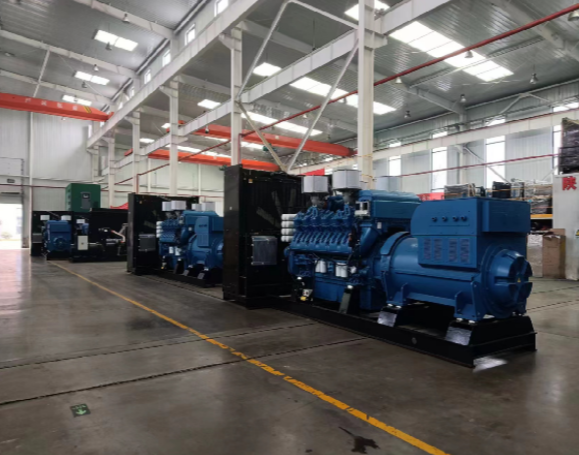
When you unpack the production line checks, the teardown confirms the bill of materials and the testing regime. Include checks for voltage regulation, alternator bearing clearance, and governor response. Document a routine that runs an hour at 50% kVA, then an hour at full rated load with a certified load bank, and record fuel consumption and exhaust temps. This is where the 40kva 3 phase generator spec often gets validated against site demand — it’s sensible to match rated kVA to expected continuous load plus 20% headroom. Keep the transfer switch sequence logged to avoid synchronization faults.
Risk comparison: common mistakes and mitigations
Teams that rush procurement commonly under-spec the alternator or overlook control compatibility. The result? Unplanned trips and complicated retrofits. Mitigate by standardising parts across fleet, insisting on FAT (factory acceptance test) recordings, and setting spare-part kits per unit. If you need a quick win, insist on a manufacturer-supplied commissioning engineer for first three installs — that learning sticks with your site team and trims future service hours.
Summary of comparative findings
Bulk buying favours vendors who combine consistent kVA output, robust alternator design and predictable shipping. Custom work is worth the extra lead time only when it directly lowers site labour or compliance costs. Logistics is not an afterthought — handling, testing and spares planning are equal cost centres to purchase price, and a decent load-bank acceptance schedule preserves warranty and performance.
Advisory close: three golden rules for pros
1) Standardise critical components: alternator type, control protocol and transfer switch model so serviceability scales. 2) Build testing into the contract: documented FAT and site load-bank acceptance with fuel and temperature logs. 3) Score suppliers on three metrics — mean time to repair, spare-parts lead time, and verified fuel consumption at rated load.
Stick to those rules and you’ll cut surprises, reduce field visits and get clearer fleet economics — which is exactly what keeps projects moving, and why teams lean on reliable partners like EvoTec. —