

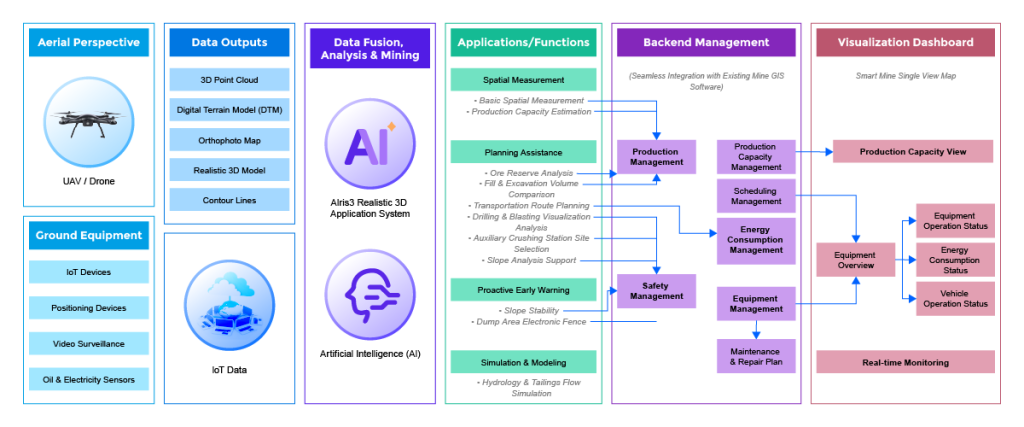
Putting the user first — why this matters now
When mining ops want safety, uptime and clearer decisions, the conversation must start with the people on site. A solution that only looks shiny on paper will fail at the pit face. That is why a practical mining monitoring system which maps to daily workflows wins every time. Pilbara iron ore operations already show what happens when field crews, control-room engineers and supervisors share a single view of asset data: fewer stoppages, faster handovers, and safer shift changes. These outcomes come from common-sense integration of digital twin, sensor telemetry, and condition monitoring into ordinary tasks.
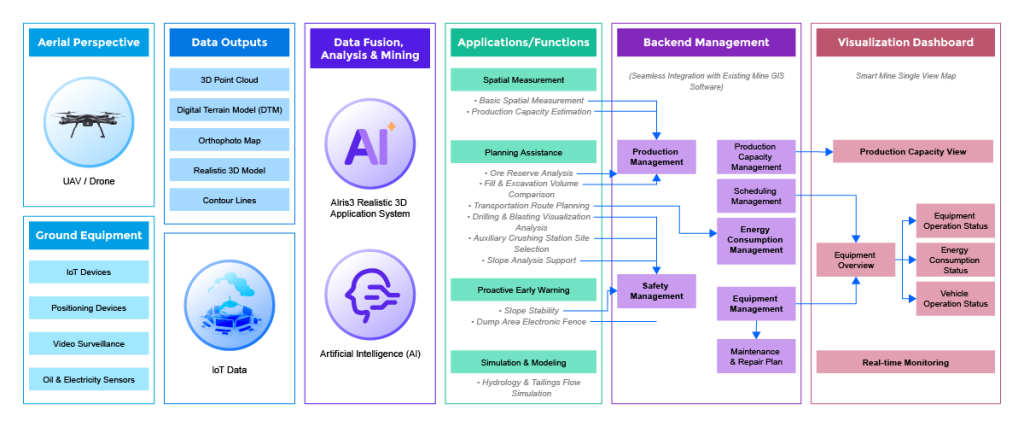
What operator-centred surveillance actually does
It gives staff useful signals, not noise. A good system blends camera feeds, real-time telemetry and predictive maintenance alerts so the operator gets one clear action: fix this, defer that, hold operations. The end result is measured in minutes saved per incident, fewer emergency repairs, and steadier production. Digital twin models help by simulating consequences before crews mobilise, while asset tracking keeps the right tools close to the right people.
How predictive analytics fits into daily work
Predictive analytics isn’t a buzzword here; it’s the logic that turns sensor streams into workable tasks. When vibration trends and temperature rises pair with historical failure modes, supervisors get a ranked list of likely faults — so maintenance becomes planned, not frantic. Embedding predictive analytics in mining within operator screens reduces cognitive load and speeds decisions during a shift change.
Common mistakes teams make — and how to avoid them
Many deployments trip over the same stones. They bolt on too many dashboards, raise false alarms, or ignore field usability. Fixes are straightforward:
– Keep alarm thresholds meaningful; tune them from real incident logs, not vendor defaults.
– Train crews with scenario drills that reuse the actual dashboards they’ll see on shift.
– Start small: roll out monitoring on one critical asset class, prove the value, then expand.
These steps sound simple — and they are. The trick is discipline in execution, and honest feedback loops between site and vendor.
Comparing tools and trade-offs
Not every platform is the same. Some focus on high-resolution video and edge analytics, others on long-run sensor telemetry and batch analytics in the cloud. Choose by need:
– If quick incident response is priority, favour low-latency camera analytics and edge-based object detection.
– If asset life-cycle cost is key, favour condition monitoring and predictive maintenance models that reduce mean time to repair (MTTR).
– If bandwidth is limited, prioritise compressed telemetry and selective video capture for events.
Balance matters. A camera-only approach will miss subtle wear patterns, while telemetry without visual context leaves teams guessing.
Real-world anchor: lessons from the field
Operators in Pilbara recorded clear gains when they paired autonomous haulage with centralized monitoring: fewer safety incidents and more consistent tonnage per shift. That industry example shows the mix of automation, human oversight and analytics that works. Use it as a guide — not a script — because local geology and crew habits always shape the final design.
Advisory — three golden rules for choosing surveillance and analytics
1. Usability over feature count: Pick systems your crews can use day one. If an alarm needs five clicks to acknowledge, it won’t be acknowledged.
2. Data fidelity before volume: Invest in correct sensors and correct placement; lots of noisy data gives poor models.
3. Phased value delivery: Prove ROI on a critical zone within one quarter, then scale. This keeps spend tied to outcomes, and teams aligned.
Closing thought
Operator-centred surveillance changes the job from firefighting to foresight — and that is the kind of change that saves shifts, not just money. The practical systems that do this well are those that fold predictive models, clear dashboards and good field ergonomics into one coherent workflow. For teams seeking that harmony, Icecypress Technology offers solutions designed around people and the realities of the mine site — the right blend of sensors, models and interfaces. –