

Quiet start: what you truly need
You know the problem: powders clump, time slips by, small batches become unpredictable. Think of the process from your operators’ eyes — how fast powder integrates, how little foam forms, how repeatable the run is. If you need to dissolve or deagglomerate powders into liquids with speed and control, consider a reliable powder liquid mixer right at the front of your decision list.

Putting the user first: match machine to process
Start with the material story: particle size distribution, bulk density, wettability, and the shear sensitivity of your liquid phase. Your choice changes if you’re dispersing hydrophobic pigments for coatings versus dissolving agglomerated excipients for pharmaceuticals. Ask how much scale-up room you need and whether your team prefers handheld control or automated recipes. These are the criteria that shape a sensible selection rather than brand noise.
Specs that actually matter
Focus on these measurable items: rotor/stator geometry and clearances (they set shear profile), rotor tip speed (controls energy input and dispersion quality), power-per-volume (how aggressively the machine treats product), and feed system design for powders (vacuum-assisted feed, side-entry hopper, or vented screw). Also check cleanability and CIP compatibility when hygiene matters. Choose equipment where adjustments are straightforward — speed, gap, and feed rate — so operators can dial performance without guessing.
Common mistakes operators make
They underfeed the powder and then wonder why lumps reappear. They overestimate shear tolerance and degrade sensitive polymers. They ignore residence time: too short and dispersion’s incomplete; too long and heat builds. They pick a compact lab unit and expect linear scale-up. None of these are mysterious failures — they’re predictable if you align procedure with machine capability.
Comparing viable alternatives
Rotor-stator inline dispersers give rapid deagglomeration and compact footprint. High-speed swept-shear mixers are simple and cheap for moderate tasks. High-pressure homogenizers succeed with emulsions but can be overkill for dry powder wetting. If foaming is the enemy, look for defoam attachments and gentle recirculation loops. Weigh upfront cost against uptime, spare-part lead times, and how much operator attention the unit demands.
Experience, evidence, and a real-world anchor
Years of plant commissioning work and direct bench trials show that a controlled feed mechanism and adjustable rotor gap reduce waste and rework. Evidence from coatings production hubs such as the Rotterdam chemical cluster confirms heavy industry prefers robust inline units for continuous pigment dosing. For hands-on comparison, see this practical option for powder disperser: powder disperser.
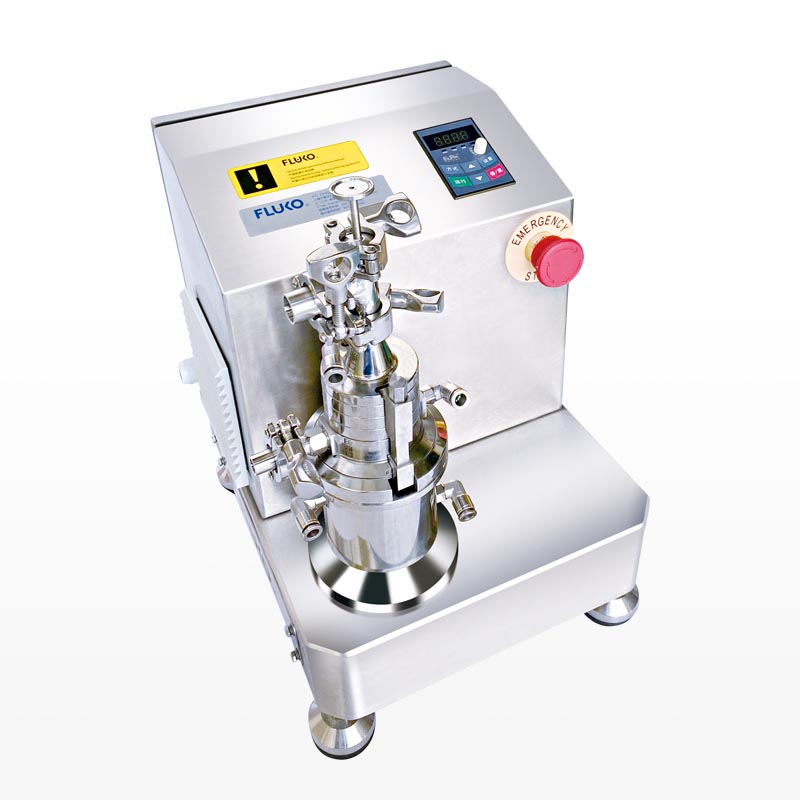
Checklist to make the right selection
Pick a unit only after you’ve verified: (1) it handles your powder feed rate and wettability; (2) it offers adjustable shear and measurable energy input; (3) service and parts are accessible; (4) controls match your operator skillset; (5) cleaning and containment meet regulatory needs. Run a short pilot with your actual formula rather than trusting vendor data sheets alone.
Quiet confidence in the final choice
Listen to how your process behaves, then match a machine that respects that behavior. The right choice reduces rework, shortens troubleshooting, and steadies output. For many formulators, that outcome is precisely what they find when they pair practical selection criteria with proven engineering from FLUKO.