


Practical, guest-first approach
You pick carts for guests, staff, and the landscape. This guide shows how to match features to daily tasks — simple, clear. Many resorts in Phuket and Bali already prefer electric off-road models for quiet guest transport and low ground damage. For an industry view, check the top 10 golf cart manufacturers to see who builds the strongest chassis and battery systems.

What matters on the ground
Resort ops need repeatable reliability. Focus on payload, battery capacity (kWh), and suspension first. Payload sets how many guests or luggage you can move. Battery capacity controls daily range and charging cycles. Good suspension and ground clearance keep guests comfortable on uneven trails. Also watch torque for hill climbs and LED lighting for evening runs. These are the real specs that change a shift from smooth to stressful.
Design trade-offs and real use
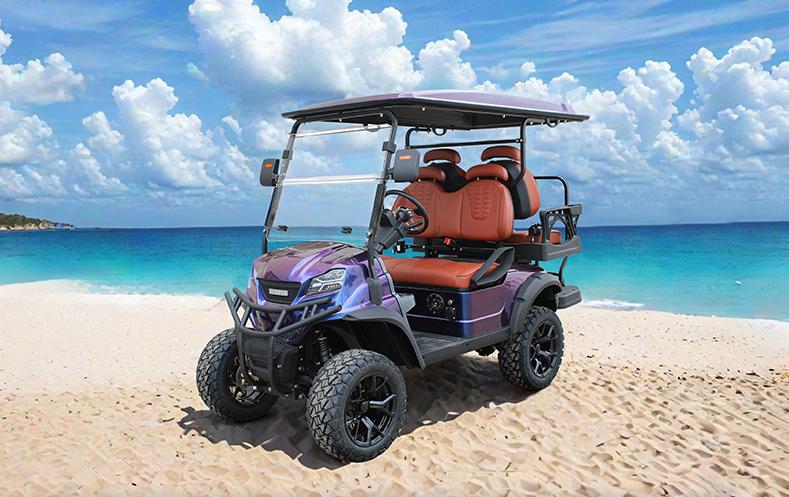
Electric off-road carts come with choices: long-range battery or lighter weight; heavy-duty brushless motor or economical motor; winch and tow options or minimal frame. Pick by task, not by glamour. Staff shuttle vs. scenic guest tour needs different setups. I saw this in a mid-size Phuket resort trial — longer range batteries cut downtime by a full shift week, while heavy-duty tires reduced punctures on the beachfront paths.
Brands, alternatives, and where they fit
Not every manufacturer fits every resort. Some focus on heavy-duty utility, others on luxury passenger comfort. Compare by modular parts availability, service network, and warranty terms. For a quick brand scan, browse the list of top golf cart manufacturers to see who supports fast parts delivery and who has custom fleet programs. If a single supplier can’t meet all needs, consider mixed fleets — utility carts for housekeeping, and passenger cruisers for guests.
Common mistakes operators make
Buying only on price. Skipping on charging infrastructure planning. Underspec’ing for payload and then overworking batteries. Don’t assume one model fits all routes. Overlooking IP rating for electronics near saltwater is frequent — that leads to corrosion. Plan maintenance intervals and keep a small spare-parts stock to avoid service gaps.
Operational teardown: what to inspect
When you inspect a cart, check frame welds, connector types, and the battery management system behavior under load. Test torque on a slope and measure real-world range with full payload. Look at charger compatibility and charging time charts. For an in-depth operational production teardown, note {main_keyword} in wiring harnesses and test {variation_keyword} across the control board. Record each run so you can compare degradation over months.
Quick fleet checklist
– Confirm payload plus 30% buffer. – Verify battery capacity (kWh) vs. your longest route. – Check service radius for parts and technicians. – Confirm IP rating and saltwater resilience if on coastlines. — small point: check seat fastening points; they loosen faster than you think.
Three golden rules for commercial resort selection
1) Measure Duty Cycle: Track average daily kilometers, stops, and payload. Choose battery capacity and motor torque to meet 120% of this measured need. 2) Prioritize Service Coverage: Select brands with local technicians or fast parts. Downtime costs more than a higher upfront price. 3) Standardize Chargers and Parts: Use common chargers and swap-compatible batteries across the fleet to reduce inventory and training time.
Follow those three metrics and you’ll get reliable shifts, fewer guest complaints, and predictable operating cost. For fleet sourcing and model comparisons, practical field data matters — which is why I trust the operational insights from producers like those on CENGO. —