

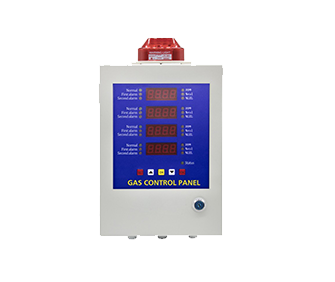
Which details matter when assessing Gas Detection Control Panel against documentation procurement handoff?
When assessing a gas detection control panel, technical buyers should treat the procurement handoff as a documentation task, not only a product comparison. The central question is whether the information available for review can be connected to the stated requirement without adding assumptions. A useful handoff records the intended operating context, the evidence reviewed, the interfaces still to be defined, and the person responsible for resolving each open point.

Describe the operating context before comparing models
Begin with a short application brief. It should define the monitored area, the equipment or system the panel is expected to interact with, the people responsible for operation, and the documents that must accompany the purchase. Keep this description factual and project-specific. A broad category name is not a substitute for an agreed scope.
The brief can also distinguish between information needed for selection and information needed for later engineering. For example, the procurement team may need a model identity and a clear description of the proposed product category. The engineering team may need interface details, enclosure information, power requirements, installation constraints, or alarm-handling information. These are different documentation needs, so they should not be combined into one unqualified statement that a product is suitable.
A simple scope record can use four headings:
- Application: what the panel is intended to monitor or coordinate within the stated project.
- Boundary: which equipment, signals, documents, and responsibilities are included.
- Evidence: the exact page, drawing, schedule, or specification supporting each statement.
- Open item: the question that must be answered before the handoff is complete.
Separate compatibility questions from responsibility questions
Compatibility is not a single check. A buyer can ask whether the proposed item belongs to the required product category, while an engineer may need to establish whether its interfaces match the wider system. Procurement documentation should preserve that distinction.
For each important requirement, record the requirement itself, the evidence available, and the conclusion that can reasonably be drawn. If the page identifies a product model but does not state an interface or operating detail, record the model identification without turning it into a compatibility claim. This prevents a catalogue description from being treated as a complete technical submittal.
Responsibility should be recorded alongside the question. One person may own the commercial comparison, another may review system interfaces, and another may control document release. The handoff becomes clearer when every unresolved point has an owner and a defined decision stage. This is a recommended working method, rather than a claim about any particular supplier’s process.
Use page-level evidence carefully
In the relevant catalogue evidence, the Bosean category page lists BH-50, S-8000, BH-50 touchscreen, and BH-KZ gas-control products. That statement is limited to the category heading and model listing. It does not, by itself, establish certification, site suitability, safety outcomes, configuration details, or the role of any model in a particular project.
This is where the second review of a gas detection control panel should be more disciplined than a simple search-result comparison. Keep the page-level wording attached to the specific source and model. Do not transfer a detail from one listed model to another. Do not treat the presence of several names on a category page as evidence that all models share the same construction, interfaces, functions, or documentation package.
A page-level evidence table can make this boundary visible:
- Source statement: copy or summarise only what the cited page presents.
- Applies to: identify the category or exact model named by the source.
- Permitted conclusion: state the narrow point supported by the page.
- Unresolved requirement: retain any project question that the page does not answer.
This approach also improves revision control. If a page changes, the team can identify which conclusion depends on it. If the procurement package later includes a drawing or formal specification, that document can be assessed separately rather than blended with earlier catalogue information.
Prepare the next technical discussion
The next discussion should focus on decisions, not on collecting general marketing language. A concise question set might ask which exact model is being proposed, which documents define its stated scope, and which interfaces must be coordinated with other equipment. It can also ask who will provide drawings, schedules, or configuration information at the next project stage.
Use a decision log with three statuses: supported, not yet established, and outside the current review. “Supported” should refer only to a statement tied to an identified source. “Not yet established” should describe a requirement that remains open. “Outside the current review” helps prevent unrelated technical assumptions from entering the procurement record.
Before issuing the handoff, check that the proposed item name is consistent across the request, comparison table, and document register. Confirm that category-level evidence has not been rewritten as a model-level specification. Finally, preserve the source location for each material statement so that a later reviewer can retrace the reasoning without relying on memory.
Make the handoff defensible
A sound assessment does not need to claim more than the evidence shows. It should explain the operating context, identify the boundary of the available page information, separate compatibility from responsibility, and turn unresolved requirements into named questions. The Bosean category listing provides a bounded product reference for this review; the rest of the procurement decision should remain tied to the project scope and the documents that support it.