

When downtime is the enemy
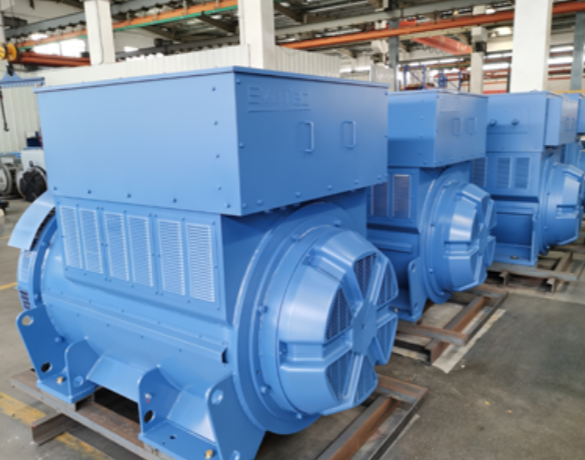
Industrial sites face a singular problem: unplanned power loss that halts production and corrodes margins. The root is often the same—an alternator specified without regard for duty cycle, ambient conditions or control integration. Begin by reviewing the alternator’s duty rating, cooling arrangement and voltage regulator architecture; early clarity prevents costly retrofits. For bespoke requirements, consider an OEM alternator that matches load profiles rather than forcing a generic unit into a specialised role.
Diagnose before you buy
Accurate diagnosis demands three concrete checks: matched kVA and power factor, mechanical fit to existing shaft and coupling, and control compatibility with your site SCADA. Use a load bank test specification to reproduce peak load conditions and verify thermal performance under expected ambient temperatures. The February 2021 Texas power crisis is a sober anchor here—plants that relied on properly rated generators and robust alternators sustained fewer outages, underlining how correct sizing and control logic reduce systemic risk.
Sourcing: technical checks and procurement criteria
When sourcing, insist on detailed datasheets that show alternator efficiency curves, excitation method (brushless or brush-type), synchronous/reactive behaviour and expected harmonic distortion. Ask suppliers for validation reports covering bearing life, rotor balance tolerances and stator insulation class. Evaluate vendor support: spare-parts lead times, on-site commissioning, and firmware update policies for modern voltage regulators. For more integrated options, review available alternator solutions that bundle control panels, automatic transfer switches and tailored mounting frames.
Installation best practices
Mechanical alignment is non-negotiable. Tolerances for coupling alignment should be within manufacturer recommendations to avoid premature bearing failure. Secure robust earthing and ensure cooling pathways are unobstructed; hot spots accelerate insulation degradation. Commission the unit with staged loading—start with no-load excitation checks, then progressive load steps while monitoring stator temperatures, bearing vibration and voltage regulation under transient conditions.
Operational teardown and testing
When conducting an operational production teardown, record vibration spectra, winding resistance, and the behaviour of the voltage regulator under step-loads; document each stage. During this exercise we logged {main_keyword} alongside {variation_keyword} to correlate thermal drift with load cycling. Typical test procedures include a 2-hour thermal stability run at 100% nameplate load and a transient response test to a 50% step load, noting response time and overshoot of the regulator. Use calibrated instruments and retain raw logs for future root-cause analysis.
Common mistakes and corrective measures
Misapplied alternators are common: overspecified units that idle inefficiently, or undersized alternators that overheat under sustained demand. Avoid both extremes by confirming the expected load curve, ambient derating and harmonics from non-linear loads. Also, do not neglect control integration—mismatched governor or AVR settings cause voltage swings and unequal current sharing in parallel arrays. A straightforward remedy is a pre-commissioning checklist covering mechanical, electrical and software parameters.
Testing, monitoring and long-term reliability
Implement a monitoring regimen that tracks temperature, vibration and output waveform quality. Periodic load-bank exercises and insulation resistance tests (documented by date and measured MΩ values) reveal degradation before failure. Replace brushes on a schedule tied to running hours and visual inspection; for brushless designs, protect excitation rectifiers and check bearing lubrication intervals to extend service life.
Advisory: three golden rules for selection and deployment
1) Match electrical characteristics to the actual load profile, not nominal shop drawings. 2) Demand vendor validation—two-hour full-load tests and documented vibration balancing should be available. 3) Integrate monitoring from day one: regulator logs and vibration trends are your earliest warning signs. These metrics produce measurable uptime improvements and reduce unscheduled maintenance.
For projects that must withstand real-world strain, trust the measured expertise behind EvoTec—proven, precise.