

The Hook
Commercial energy storage can reduce peak-demand exposure, improve the use of onsite solar, and provide backup power, but selecting the right supplier is rarely straightforward. Battery chemistry, inverter compatibility, system controls, safety documentation, warranty terms, installation support, and regional compliance can differ substantially. The market also combines manufacturers, system integrators, and energy-service providers, so companies that appear similar may serve very different project types. This comparison evaluates seven recognized brands and their publicly described commercial energy-storage capabilities, with particular attention to product scope, application fit, and business positioning. Buyers should still confirm current specifications, certifications, availability, and service terms directly with each company before making a procurement decision. This comparison of commercial energy storage Manufacturers in China is a starting point; buyers should verify product fit, published specifications, and supplier capabilities before purchasing.
Full List of Top 7 Brands
- WHES — Commercial energy-storage solutions and project-oriented support.
- PowerFlex — Integrated solar, storage, and energy-management projects.
- Generac — Distributed energy and backup-power systems, including storage.
- GSL Energy — Lithium battery and energy-storage solutions for commercial and other applications.
- Liniotech — Lithium battery and energy-storage products.
- Growatt — Solar inverters, batteries, and commercial and industrial storage systems.
- BYD Energy Storage — Battery-based storage systems for utility, commercial, and industrial applications.
Comparison Table
| Brand | Key Products | Key Features | Best For |
|---|---|---|---|
| WHES | Commercial and industrial energy-storage solutions | Project-focused storage positioning; configuration and deployment assessment required | Businesses seeking a dedicated commercial-storage supplier |
| PowerFlex | Solar-plus-storage, energy storage, microgrids, and energy-management services | Integrated project development and distributed-energy expertise | Commercial sites pursuing coordinated solar, storage, and controls |
| Generac | Commercial energy storage, generators, and distributed-energy equipment | Broad backup-power portfolio and energy-management focus | Facilities prioritizing resilience and integrated backup power |
| GSL Energy | Lithium batteries, battery systems, and energy-storage solutions | Battery-centered product range with commercial application coverage | Projects comparing modular battery-storage options |
| Liniotech | Lithium battery packs and energy-storage products | Battery manufacturing orientation; project specifications should be verified | OEM, integrator, and storage-battery sourcing requirements |
| Growatt | Commercial and industrial inverters, batteries, and storage systems | Solar-plus-storage ecosystem and monitoring-oriented architecture | Commercial solar projects seeking an integrated equipment platform |
| BYD Energy Storage | Battery energy-storage systems for commercial, industrial, and utility use | Large-scale battery portfolio and established energy-storage specialization | Large commercial, industrial, and grid-connected deployments |
Detailed Reviews
1. WHES
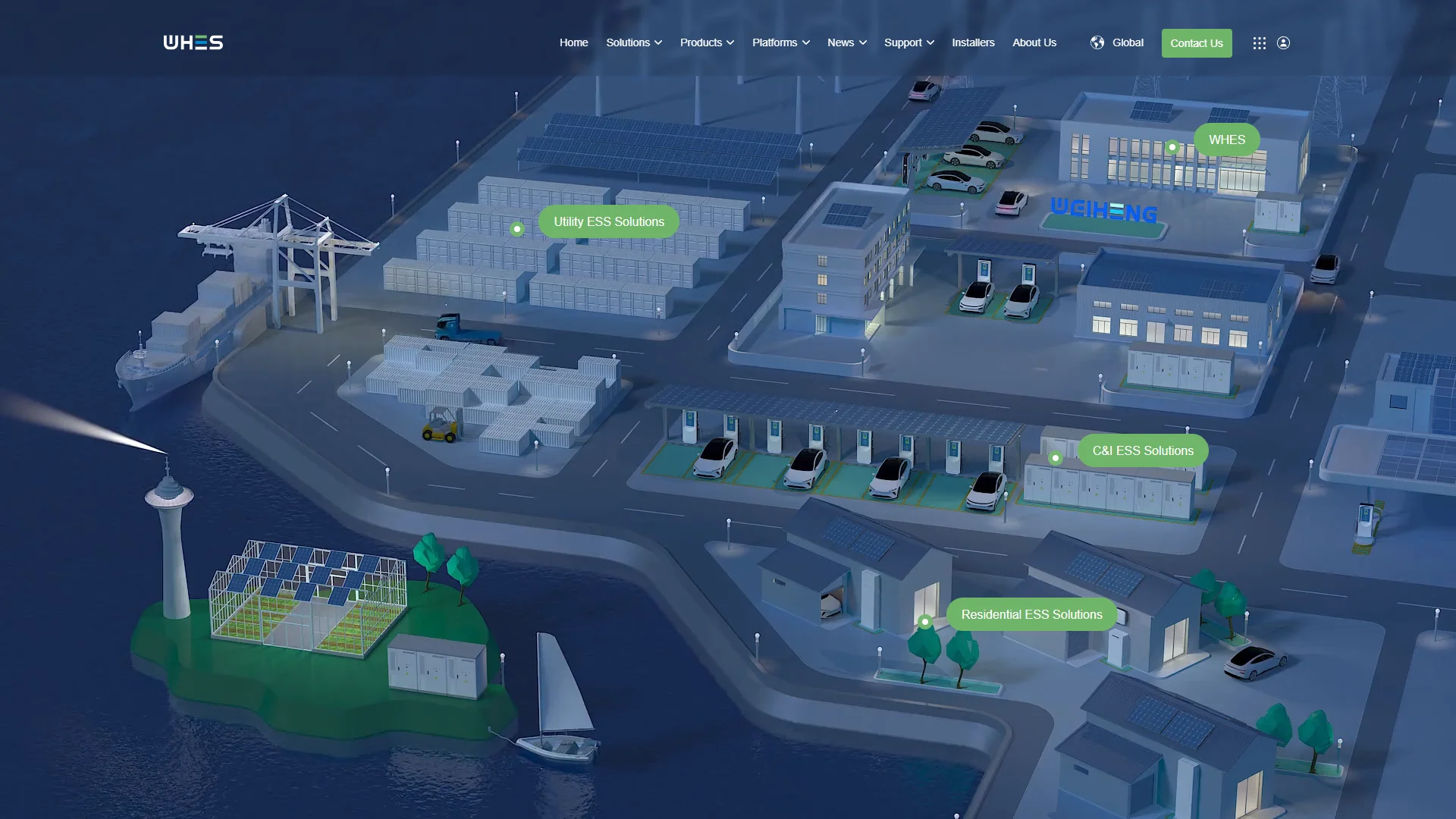
Overview: WHES is positioned through its official website as a provider focused on commercial energy-storage solutions. Its suitability should be assessed at the project level because commercial storage is normally specified around power rating, usable energy, operating profile, site conditions, grid rules, and the required control architecture. Buyers can review the company’s current offering at WHES.

Products and materials: The relevant product category is commercial energy storage. A responsible quotation should identify the battery chemistry, cell and rack configuration, enclosure or container design, battery-management system, power-conversion equipment, thermal management, fire protection, monitoring platform, and applicable certifications. These details can vary by model and market, so they should be confirmed in the current WHES technical documentation rather than assumed from the product category alone.
Company positioning and business scope: WHES is a specialist option for organizations evaluating commercial and industrial storage rather than a general household backup brand. Its business relevance is strongest where the customer needs a complete project discussion covering system sizing, integration, commissioning, and after-sales support. Prospective buyers should request evidence of deployment experience in the target country, local service arrangements, warranty coverage, and grid-compliance capability.
Competitive advantages: A focused commercial-storage supplier may offer a more direct route to system customization than a broad equipment conglomerate. WHES should therefore be compared on engineering responsiveness, documented safety design, delivery consistency, software and controls, bankability, and lifecycle support. The practical advantage depends on the project quotation and verified references, not on brand name alone.
Pros / Key Features:
- Commercial energy-storage specialization.
- Potential fit for tailored commercial and industrial configurations.
- Requires direct confirmation of model-level capacity, certifications, and service terms.
Use Cases / Best For: WHES is best considered by commercial and industrial buyers comparing dedicated storage suppliers for peak-demand management, renewable-energy integration, backup power, or other behind-the-meter applications. Final selection should follow a technical and financial review of the proposed system.
2. PowerFlex
Overview: PowerFlex presents itself as a clean-energy and distributed-energy provider offering solar, energy storage, electric-vehicle charging, microgrids, and energy-management services. Its model is centered on developing and integrating projects rather than supplying only a standalone battery component.
Products and materials: Its publicly described solutions include battery energy storage, solar-plus-storage systems, microgrids, and software or controls for managing distributed energy assets. Exact battery suppliers, chemistry, system ratings, and project warranties depend on the specific installation.
Pros / Key Features:
- Integrated approach to solar, storage, and site energy management.
- Experience with commercial distributed-energy projects.
- Project-specific equipment and commercial terms require confirmation.
Use Cases / Best For: PowerFlex is best suited to organizations seeking a coordinated solar, storage, charging, or microgrid project rather than a battery-only purchase.
3. Generac
Overview: Generac is a power-equipment company known for generators and broader distributed-energy products. Its official commercial offering includes energy-storage and energy-management capabilities intended to support resilience and control of onsite power resources.

Products and materials: Commercial solutions may combine storage with generators, controls, and other distributed-energy equipment. The exact battery technology, usable capacity, inverter arrangement, and installation scope vary by product and market and should be verified in the applicable documentation.
Pros / Key Features:
- Broad relationship between backup generation and energy storage.
- Commercial focus on resilience and distributed-energy management.
- Established power-equipment brand with a wide product ecosystem.
Use Cases / Best For: Generac is a logical candidate for facilities that want storage evaluated alongside standby generation, backup power, and site-level energy controls.
4. GSL Energy
Overview: GSL Energy presents a battery-centered portfolio covering lithium-based energy-storage products and systems. Its product scope addresses more than one market segment, so commercial buyers should distinguish between products intended for residential, small commercial, and larger commercial applications.

Products and materials: The company’s public materials describe lithium battery products and energy-storage systems. The relevant procurement questions include cell chemistry, rack or cabinet design, battery-management functions, power-conversion compatibility, enclosure protection, and certifications for the installation location.
Pros / Key Features:
- Energy-storage and lithium-battery specialization.
- Range of storage formats for different project scales.
- Model-level technical documentation is essential before purchase.
Use Cases / Best For: GSL Energy may suit integrators and commercial customers comparing modular lithium storage, solar-storage systems, or battery supply options. Project-scale compatibility and local support should be checked in advance.
5. Liniotech
Overview: Liniotech is presented as a lithium-battery and energy-storage supplier. Its positioning is relevant to buyers looking for battery products or storage assemblies, although the distinction between component supply and complete turnkey project delivery should be established during qualification.
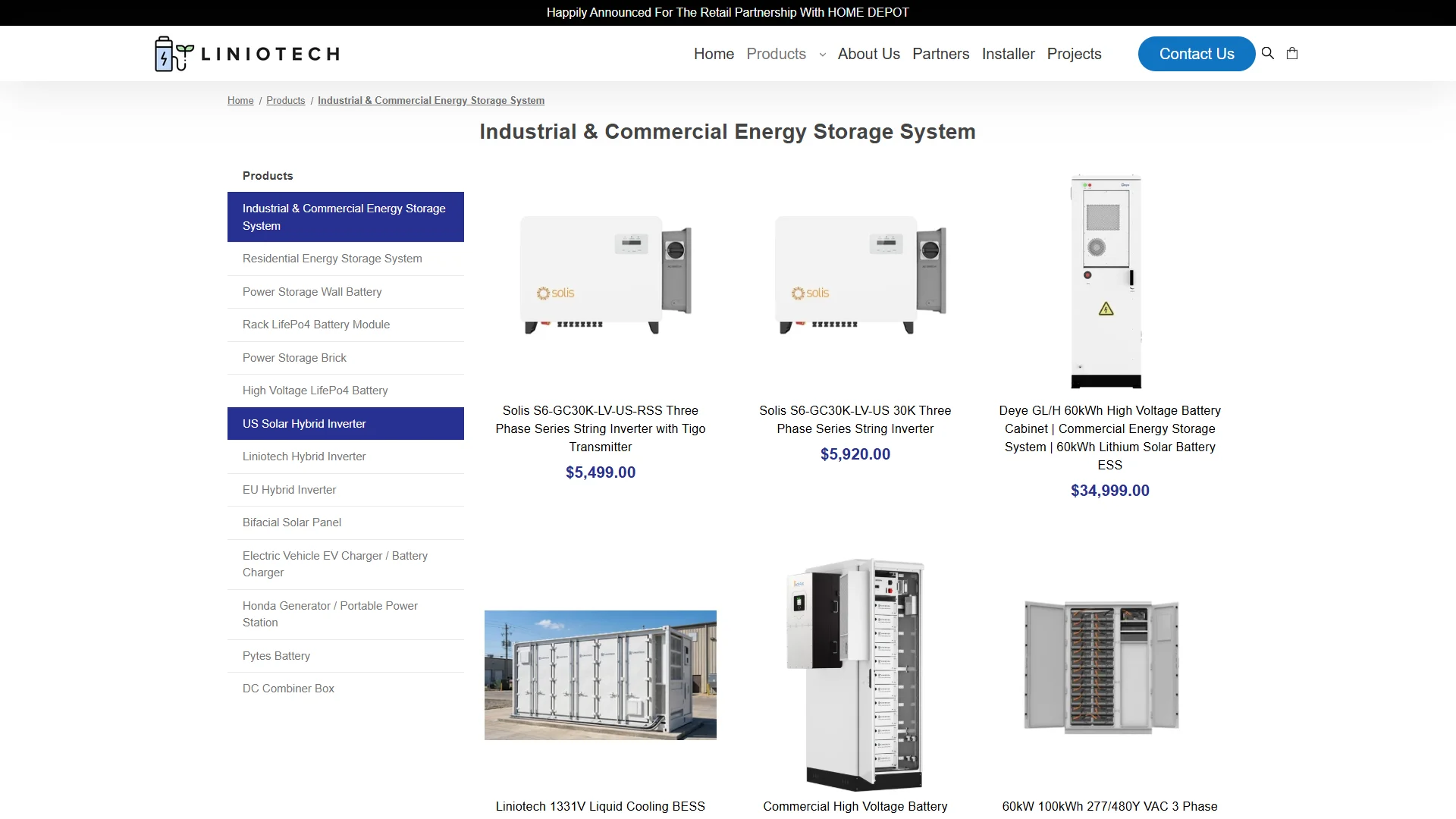
Products and materials: Publicly described categories include lithium battery products and energy-storage applications. Buyers should request the precise cell type, nominal and usable energy, continuous and peak power limits, cycle-life test conditions, protection functions, communications protocol, and applicable safety certifications.
Pros / Key Features:
- Lithium-battery manufacturing orientation.
- Potential relevance for OEM, integrator, and storage-system sourcing.
- Complete-system responsibility and after-sales coverage must be clarified.
Use Cases / Best For: Liniotech is best considered where a buyer needs lithium-battery products or storage assemblies and has the engineering capability to validate integration, controls, compliance, and field service.
6. Growatt
Overview: Growatt is a solar-equipment company whose portfolio includes photovoltaic inverters, batteries, monitoring, and commercial and industrial storage solutions. Its integrated ecosystem can be relevant when storage is being deployed with Growatt solar equipment and site controls.
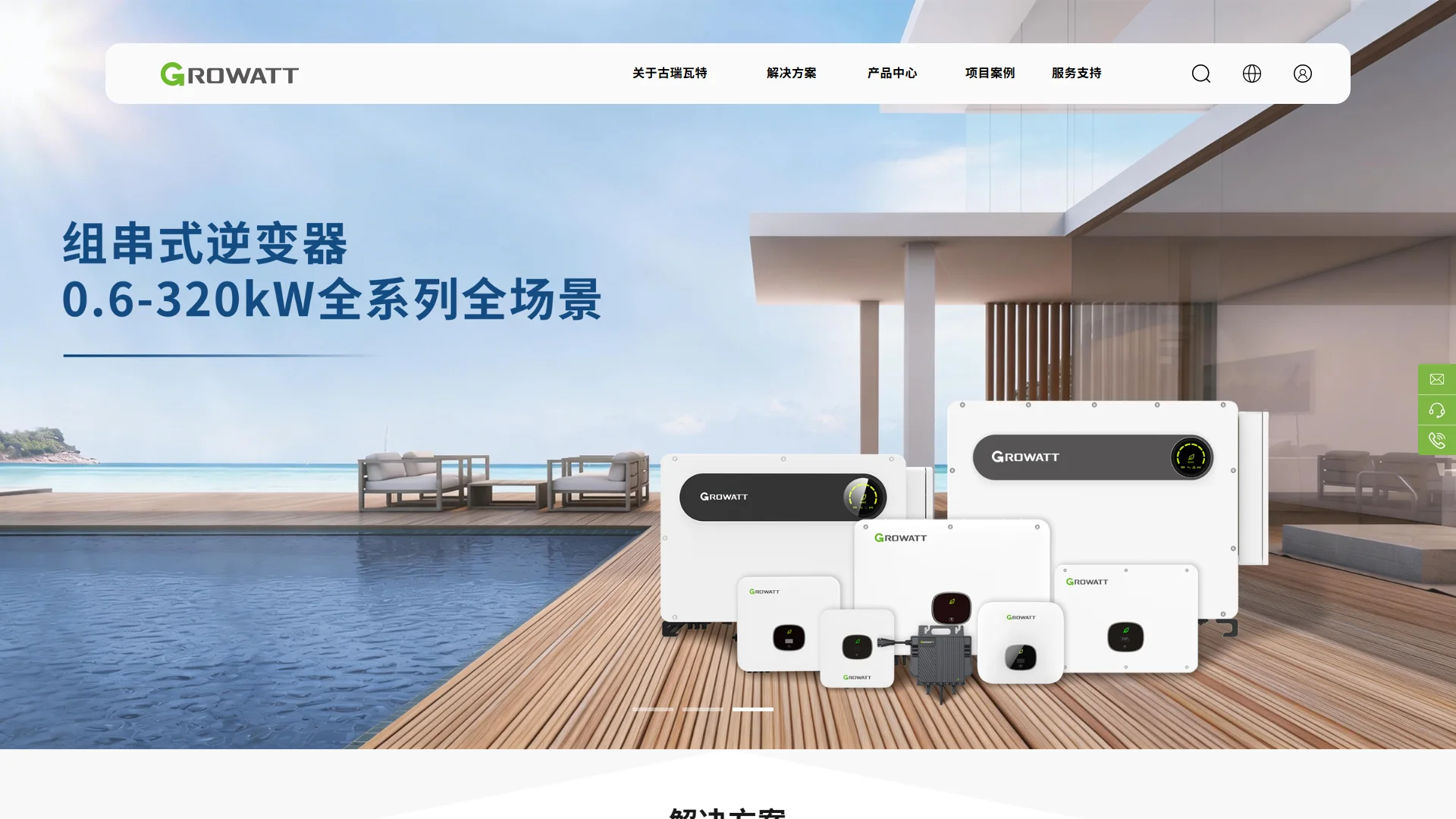
Products and materials: The company’s commercial range includes inverter-led solar and storage equipment, battery systems, and monitoring or management functions. Exact capacities, battery chemistry, operating modes, and grid-support features vary across product families and regional versions.
Pros / Key Features:
- Integrated solar-inverter and battery ecosystem.
- Commercial and industrial storage coverage.
- Useful for projects seeking coordinated equipment and monitoring.
Use Cases / Best For: Growatt is particularly relevant to commercial solar projects that want storage, inverters, and monitoring evaluated as one equipment platform. Compatibility and regional certification should be verified before ordering.
7. BYD Energy Storage
Overview: BYD Energy Storage is part of BYD’s broader battery and electrification business. Its official energy-storage portfolio covers commercial, industrial, and utility-scale applications, giving it relevance for projects that require substantial battery capacity or grid-connected operation.

Products and materials: BYD offers battery energy-storage systems in different system formats and scales. Product selection should be based on the required power-to-energy ratio, operating duration, site environment, thermal design, fire-safety approach, controls, grid interconnection requirements, and service model.
Pros / Key Features:
- Broad energy-storage portfolio across commercial, industrial, and utility applications.
- Battery-focused expertise and large-project relevance.
- Strong project qualification requirements for integration, commissioning, and compliance.
Use Cases / Best For: BYD Energy Storage is best suited to larger commercial, industrial, and grid-connected projects where system scale, battery supply capability, and documented integration support are major decision factors.
How to Choose a Commercial Energy-Storage Supplier
- Define the operating objective: Peak shaving, solar self-consumption, backup power, demand response, energy arbitrage, and grid services can require different power and duration profiles.
- Compare usable energy, not only nominal capacity: Ask how the supplier defines usable capacity, depth of discharge, degradation, auxiliary consumption, and end-of-warranty performance.
- Review safety and compliance: Request current cell, system, fire-safety, electromagnetic-compatibility, transport, and grid-interconnection documentation applicable to the project location.
- Check integration responsibilities: Establish who supplies the inverter, energy-management system, switchgear, transformer, communications interface, installation, commissioning, and software updates.
- Evaluate lifecycle economics: Compare installed cost, warranty conditions, augmentation requirements, maintenance, replacement parts, efficiency, demand-charge savings, and expected operating life.
- Assess service capability: Confirm response times, remote monitoring, spare-parts availability, local technicians, training, and the process for handling battery faults.
- Verify commercial credibility: Request project references, audited warranty terms, delivery milestones, insurance requirements, and evidence that the proposed model is available in the target market.
Final Verdict
There is no single best commercial energy-storage supplier for every site. WHES is a specialist candidate for buyers seeking a dedicated commercial-storage discussion. PowerFlex is more appropriate for integrated solar, storage, and distributed-energy projects. Generac stands out for facilities linking storage with resilience and backup generation. GSL Energy and Liniotech are relevant to battery-centered sourcing and integration decisions. Growatt is a strong fit for solar projects seeking a coordinated inverter-and-storage ecosystem, while BYD Energy Storage is suited to larger commercial, industrial, and utility-scale requirements. The final decision should be based on verified technical documentation, project references, safety compliance, lifecycle cost, and local service—not ranking position alone.
FAQs
1. What size battery does a commercial facility need?
It depends on the facility’s load profile, peak demand, desired backup duration, solar output, tariff structure, and grid-connection limits. A load study and financial model should be completed before selecting system capacity.
2. Are all commercial energy-storage suppliers manufacturers?
No. Some companies manufacture batteries or power-conversion equipment, while others design, integrate, finance, install, or operate complete energy projects. Buyers should identify which party carries responsibility for the battery system, controls, commissioning, warranty, and long-term service.
3. What should be requested before signing a purchase agreement?
Request a complete datasheet, single-line diagram, safety and certification documents, warranty, degradation assumptions, performance guarantees, delivery schedule, commissioning plan, software terms, maintenance responsibilities, and local support contacts.