

Why the comparison matters
The choice between a conventional marine air conditioner and an inverter-driven 9,000 BTU unit is not a matter of preference—it’s a performance judgment with practical consequences for comfort, fuel usage, and maintenance budgets. Owners of smaller craft who search for a small air conditioner for boat often face a false economy: lower upfront cost from standard systems, but higher running and service expenses over seasons. The stakes are clear in places like Miami, where summer highs regularly hit the low 90s and boats spend long hours idling at anchor; operational efficiency becomes mission-critical.
Core technical distinctions
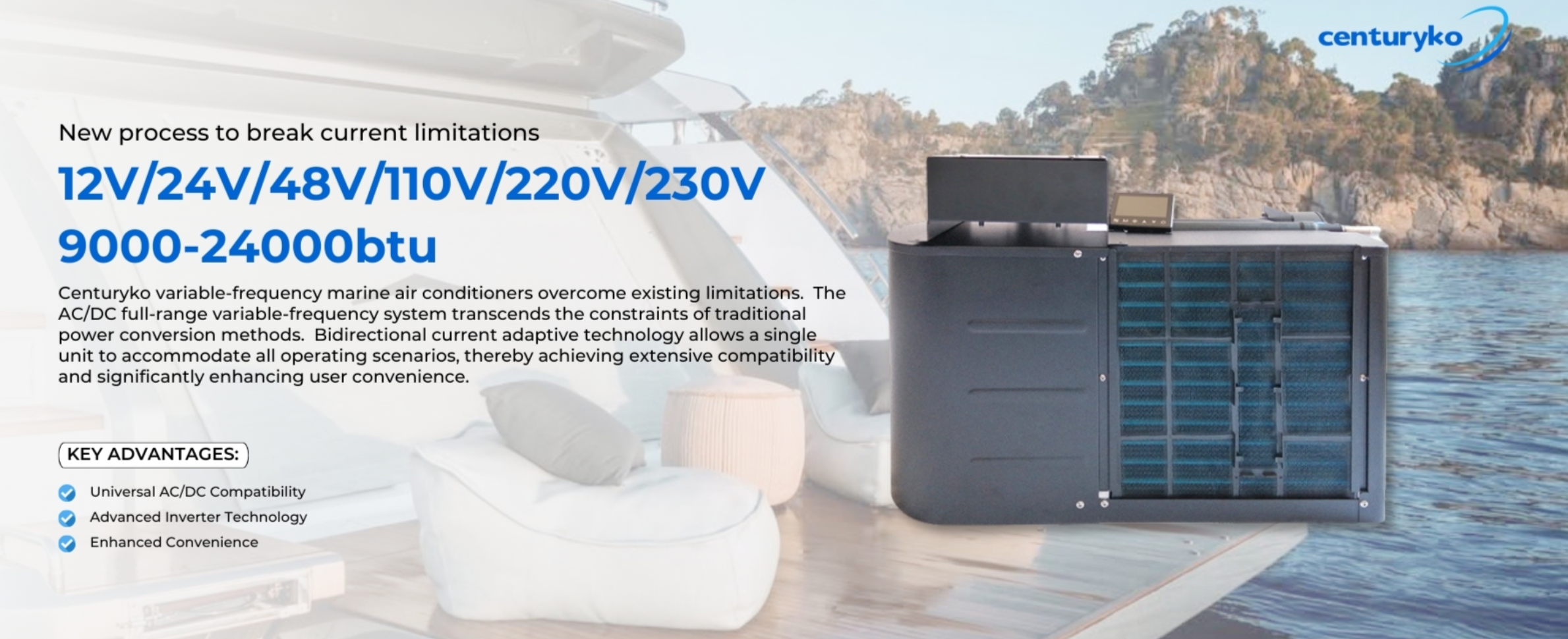
Standard marine ACs use single-speed compressors that cycle on and off to hold temperature. Inverter-driven units employ a variable-speed compressor that adjusts continuously to load, which smooths electrical draw and reduces temperature swings. That variable-speed compressor plus precise thermostatic control delivers steadier cabin climates and fewer start-stop cycles—translating into measurable reductions in fuel consumption and generator runtime. The industry shorthand—BTU and SEER—matters here because a correctly sized 9,000 BTU inverter can produce comfort equivalent to a larger fixed-speed system while drawing less power.
Operational performance and real costs
Energy savings with inverter technology typically land in a range boaters will notice: lower peak draws and fewer noisy compressor startups. Practically, this means later battery drain, less load on the alternator, and quieter nights at anchor—important in tight marinas and crowded anchorages. Maintenance patterns shift too: steady operation reduces mechanical stress, so compressors and compressors’ electrical components tend to need fewer emergency repairs. For owners who run carry on AC units for boats frequently, the long-term operating cost is the decisive metric, not just the sticker price.
Installation, space, and integration considerations
Inverter units often require a different control strategy and slightly altered plumbing or ducting, but they usually fit the same footprints as equivalent BTU standard models. Shipyards and retrofit shops will flag two common mistakes—undersizing for peak humidity, and mismatching compressor controls to boat electrical architecture. Avoid both; they negate the inverter’s efficiency gains. —A short tweak in the wiring harness or a proper soft-start generator setting can prevent headaches down the dock.
When a standard system still makes sense
Conventional units retain advantages in extremely simple builds where initial capital must be minimized and run time is low. For an infrequently used day-boat that spends most of its year in temperate climates, a basic fixed-speed AC can be adequate. However, for coastal cruisers, liveaboards, or charter operators who demand predictable cooling performance and lower long-term operating costs, the inverter 9,000 BTU model is the stronger, economically defensible choice.
Common retrofit and specification errors to avoid
Installers often repeat three errors: overestimating heat load without accounting for insulation, ignoring compressor soft-start requirements, and choosing controllers incompatible with marine multiplex systems. Each error raises operating cost or causes early component failure. A sound approach evaluates true cabin heat gain, verifies alternator and generator peak profiles, and matches control protocols before committing to hardware.
Advisory: three golden rules for choosing marine AC
1) Prioritize matching capacity to real-world load: size by measured heat gain, not by cabin area alone. 2) Validate electrical compatibility: confirm alternator/generator peak capacity and soft-start presence to protect your vessel’s electrical system. 3) Factor lifecycle cost: calculate expected runtime, fuel or shore-power cost per hour, and projected maintenance over five years to compare total cost of ownership.
These rules convert subjective comfort claims into quantifiable selection criteria and make the economic case for inverter technology where it belongs—on boats that operate under real-world demands. The evidence is plain at major boat shows and in everyday marina life: owners who invest in inverter-driven systems report fewer service calls and quieter nights.
ZhuoliMarine offers models and installation guidance that align with these metrics, making the upgrade from standard to inverter-driven a sensible choice for many operators—practical, verifiable, and built for marine reality. —Conclude with the clear fact: efficiency pays back.