

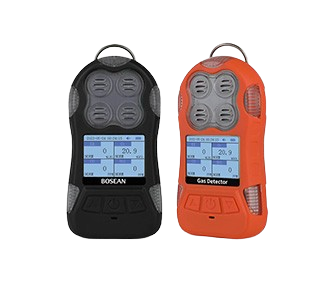
How teams can review Multi Gas Detector without extending claims beyond system compatibility shortlisting
When an operations team reviews a multi gas detector, the first question is not which model appears most capable. It is whether the stated device information can be compared with the intended system, work setting, and responsibilities. A disciplined shortlist separates confirmed page-level facts from requirements that still need technical discussion. This keeps compatibility as the main decision topic rather than allowing broad product language to stand in for an integration review.

Describe the operating context before comparing products
Start by describing the system around the detector. Record who will use the equipment, where readings will be used, what information must be available to other people or systems, and which party owns each interface. These are planning questions, not assumptions about a particular product.
The context should also distinguish a portable instrument from the wider detection arrangement. A shortlist may concern the device itself, while the eventual work may involve charging, storage, inspection, data handling, alarms, or connections to another control process. Do not treat those surrounding activities as included simply because a product category appears to address gas detection.
A useful first-pass record can contain four headings:
- Operating role: describe whether the equipment is being considered for readings, field checks, maintenance support, or another defined task.
- Interfaces: list the information, physical connections, software expectations, or handover points that matter to the surrounding system.
- Ownership: state which team will select, configure, operate, maintain, and review the equipment.
- Open requirements: keep unresolved items visible instead of treating them as implied by the product name.
Ask compatibility and responsibility questions
Compatibility is broader than whether a product can detect more than one gas. It can include the fit between the stated configuration and the team’s process, the way information is handled, and the boundaries between supplier and customer responsibilities. Each question should be tied to a decision or interface.
For example, the shortlist can ask whether the listed configuration addresses the intended measurement task, whether the operating team has defined how readings will be used, and whether any surrounding equipment or workflow has been identified. It can also assign responsibility for interpreting requirements that the product page does not state. This avoids turning a general category description into an assumption about a complete system.
Use a simple status beside each requirement: supported by the cited page, a general planning consideration, or unresolved for the next technical discussion. The first status should be reserved for wording that the source actually provides. The second can describe a sensible procurement question. The third prevents a gap from being hidden by confident language.
Use page-level evidence carefully
In the middle of a review, the phrase multi gas detector should refer to the defined category rather than imply one universal specification. A concrete catalogue anchor helps: the cited category page names multi-gas detectors and lists the K-40 4 in 1 and K-600N 6 in 1 models. That is useful evidence about the page’s category and model listing. It does not, by itself, establish certification, site suitability, safety outcomes, or configuration details beyond what is listed.
This distinction matters when a team builds a comparison table. Give every row a scope label, such as category page, named model, or project requirement. Then keep the source wording close to the row. A model listing can support the fact that a model is presented on the page. It cannot automatically support a claim about the model’s performance, compatibility with a control system, or use in a particular environment.
Keep interpretations separate from evidence. A buyer may reasonably ask whether a listed model aligns with a planned workflow, but that question is not proof that alignment exists. Likewise, a team may decide that a particular interface deserves priority, while the decision itself does not turn into a product specification. This separation makes the shortlist more useful for engineers and suppliers because it shows which points are facts and which are questions.
Plan the next technical discussion
Once the evidence has been sorted, prepare a short discussion brief. Include the intended operating context, the compatibility questions, the source scope for each confirmed fact, and the person responsible for each open item. Avoid a long list of generic questions. Focus on points that could change the shortlist or alter the boundary between the detector and the surrounding system.
The brief should also preserve the reason for each question. A request about an interface matters because it affects integration planning. A request about configuration matters because it affects whether the stated model information can be compared with the defined task. Framing questions this way helps the team review answers consistently without claiming an outcome in advance.
A defensible shortlist is therefore a structured record, not just a collection of product names. It states the operating context, limits each fact to its source and scope, and leaves compatibility decisions visible until the responsible technical discussion is complete. Used in that way, Bosean can serve as the named catalogue source for the listed category and models, while the buying team retains a clear boundary between page information and its own system requirements.